
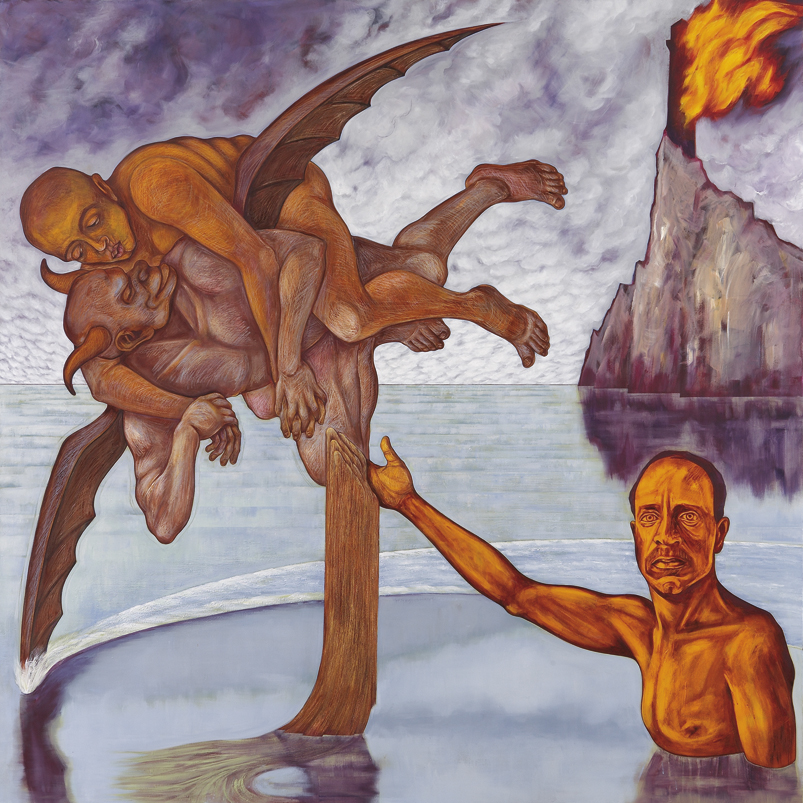

Sometimes she walks through the village in her
little red dress
all absorbed in restraining herself,
and yet, despite herself, she seems to move
according to the rhythm of her life to come.
She runs a bit, hesitates, stops,
half-turns around…
and, all while dreaming, shakes her head
for or against.
Then she dances a few steps
that she invents and forgets,
no doubt finding out that life
moves on too fast.
It’s not so much that she steps out
of the small body enclosing her,
but that all she carries in herself
frolics and ferments.
It’s this dress that she’ll remember
later in a sweet surrender;
when her whole life is full of risks,
the little red dress will always seem right.
Death
Come thou, thou last one, whom I recognize,
unbearable pain throughout this body’s fabric:
as I in my spirit burned, see, I now burn in thee:
the wood that long resisted the advancing flames
which thou kept flaring, I now am nourishinig
and burn in thee.
My gentle and mild being through thy ruthless fury
has turned into a raging hell that is not from here.
Quite pure, quite free of future planning, I mounted
the tangled funeral pyre built for my suffering,
so sure of nothing more to buy for future needs,
while in my heart the stored reserves kept silent.
Is it still I, who there past all recognition burn?
Memories I do not seize and bring inside.
O life! O living! O to be outside!
And I in flames. And no one here who knows me.
Losing
Losing too is still ours; and even forgetting
still has a shape in the kingdom of transformation.
When something’s let go of, it circles; and though we are
rarely the center
of the circle, it draws around us its unbroken, marvelous
curve.
Portrait of my Father as a Young Man
In the eyes: dream. The brow as if it could feel
something far off. Around the lips, a great
freshness–seductive, though there is no smile.
Under the rows of ornamental braid
on the slim Imperial officer’s uniform:
the saber’s basket-hilt. Both hands stay
folded upon it, going nowhere, calm
and now almost invisible, as if they
were the first to grasp the distance and dissolve.
And all the rest so curtained within itself,
so cloudy, that I cannot understand
this figure as it fades into the background–.
Oh quickly disappearing photograph
in my more slowly disappearing hand.
The Spanish Dancer
As on all its sides a kitchen-match darts white
flickering tongues before it bursts into flame:
with the audience around her, quickened, hot,
her dance begins to flicker in the dark room.
And all at once it is completely fire.
One upward glance and she ignites her hair
and, whirling faster and faster, fans her dress
into passionate flames, till it becomes a furnace
from which, like startled rattlesnakes, the long
naked arms uncoil, aroused and clicking.
And then: as if the fire were too tight
around her body, she takes and flings it out
haughtily, with an imperious gesture,
and watches: it lies raging on the floor,
still blazing up, and the flames refuse to die –
Till, moving with total confidence and a sweet
exultant smile, she looks up finally
and stamps it out with powerful small feet.
Περισσότερα για τον ζωγράφο ΕΔΩ: http://www.mouhasiris.gr/


Να κι ένας ποπσταρ ζωγράφος με όλο το “πακέτο”. Ότι πρέπει για να τονωθεί η αγορά.
Αλήθεια γιατί τα ποίηματα είναι στα εγγλέζικα;
Τίνος οι μεταφράσεις;
Ανακάλυψα το Rilke πρώτη φορά στην τρυφερή ηλικία των δεκατεσσάρων. Ο πατέρας μου, λάτρης της ποίησης, είχε στη σοφίτα του τα Ελεγεία του Ντουίνο σε μία έκδοση στα γερμανικά του 1954. Από τότε δε σταμάτησα να το διαβάζω και να το ξαναδιαβάζω. Ο μεταφυσικός υπαρξισμός του αντιπαλεύεται με την υποϋπαρξιστική συνθήκη. Είναι το τραύμα μας αιώνιο κι όμως κρατά για τόσα λίγα χρόνια… Είναι θα τολμούσα να πω σχεδόν αυνανιστική η παλινδρομική ανάγκη να διυλίζω τα νοήματα που αναδιπλώνονται και περιδιπλώνονται στη δουλειά του Ρίλκε, και αυτή μου η λαβυρινθώδης περιήγηση κρατά από τα πρώιμα χρόνια της πρώτης αθωότητας.
Das Alter macht nicht kindisch, wie man spricht,
-Es findet uns nur noch als wahre Kinder.
-Goethe, Faust
Καλημέρα στην όμορφη Ελλάδα και τα αιώνια παιδιά της,
Μάριος Π. Βιτάλης (Ο συγγραφέας του “The Nightshift”)
Red is the color of agony when one dream passes the path of life and returns like a short frame of the Ade’s ashes ….great poetry!
http://livadas.blogspot.com/2010/05/yannis-livadas-bad-news-for-poet-peter.html
Ευχαριστώ πολύ για αυτά τα υπέροχα ποιήματα! 🙂
Υπέροχες εικόνες των ποιημάτων του Ρίλκε αλλά και των έργων του κου Μουχασίρη.
Δεν ξέρω αν υπήρχε πρόθεση να ταυτιστούν κάπως οι δυο τους, ή απλώς συμπορεύτηκαν στην ανάρτηση, στο μυαλό μου συναντήθηκε η 4η ελεγεία του Ντουίνο με κάποιο απ’ τα έργα της 1ης περιόδου του ζωγράφου.
Την καλημέρα μου!
Celestia, ο κύριος κάτω δεξιά στον πίνακα, είναι ο Rilke…
Ευχαριστώ για την διευκρίνηση! 🙂
(νομίζω πως στο site του κου Μουχασίρη δεν τιτλοφορούνταν οι πίνακες (?))
Οι μεταφράσεις (για όποιον βαριέται να ψάχνει στο Google) είναι του Stephen Mitchell.
Ο ποιητής γράφει στην γλόσσα που εκφράζει καλύτερα τα αισθήματά του!
Η ποίηση προκύπτει από”την αυθόρμήτη υπερχείλιση των ισχυρών συναισθημάτων”.
Γουίλλμιαμ Γουόρντσγουορθ
(William Wordsworth)